Short answer
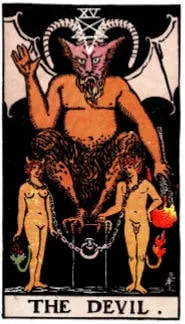
The Devil represents temptation, attachment and patterns that restrict freedom in tarot. The card asks where a desire or habit is gaining more influence than you want it to have.
Upright meaning
Upright, The Devil invites an honest look at dependency, shame or control. Naming a pattern can reveal choices that felt unavailable.
Reversed meaning
Reversed, the card may reflect recognizing and loosening a pattern. It can also highlight how difficult releasing a familiar attachment feels.
The Devil in love
In love, The Devil can draw attention to attraction, jealousy or unequal power. Intensity is not the same as mutual respect.
The Devil and career
At work, the card suits status pressure or staying only because leaving feels daunting. Consider what is really influencing your decision.
The Devil and money
For money, the symbolism concerns temptation and status. Ask whether a purchase meets a need or is mainly meant to cover an uncomfortable feeling.
The Devil as a daily card
Notice one automatic response before following it today. A brief pause may reveal a choice you had overlooked.
Yes or no?
A leaning toward no when pressure, craving or dependency directs the choice. Awareness fits this card better than immediate surrender to an impulse.
Frequently asked questions
Does The Devil mean I am cursed?
No. This reading uses the card to explore human patterns and temptation, not as evidence of a curse or supernatural threat.
Is The Devil always bad in a love reading?
Not automatically. Passion may be part of the image, but the useful question is whether freedom, boundaries and respect have enough room.
These texts are original, contemporary interpretations of tarot as symbolic reflection. Meanings, reversals and yes-or-no readings vary between traditions. Historical background for Rider-Waite-Smith symbolism: A. E. Waite, The Pictorial Key to the Tarot.